

A couple from Del Mar called me last fall, completely exhausted. They had spent six months and over twenty thousand dollars working with an independent architect on plans to expand their mid-century modern home to capture a panoramic ocean view. The drawings were breathtaking—a seamless indoor-outdoor transition with a massive 20-foot multi-panel sliding glass door leading to a new cantilevered deck. But when they finally shopped those plans around to San Diego builders, the reality check was brutal. Every single bid came in nearly double their budget. Why? The architect had drawn the massive opening and deck without realizing that our local coastal bluff zoning restrictions, complex seismic engineering requirements, and the need for deep caissons to anchor into the sandy slope would add six figures to the structural costs alone. Plus, they specified custom European glass doors with an 11-month lead time that didn’t meet California’s strict Title 24 energy standards. The architect blamed the builders for price gouging. The builders blamed the architect for drawing a fantasy. And the homeowners were left holding a very expensive stack of paper they couldn’t afford to build.
That conversation is the entire reason I’m writing this. After 12 years in this industry, I can tell you the hardest part of remodeling is usually the gap between the person who designs your project and the person who builds it — long before the dust and noise show up. Close that gap, and everything else gets easier.
That’s the difference between hiring a design-build company and hiring a build-only contractor. So let me walk you through what each one actually means, where the cracks tend to open up, and why most of the homeowners we work with — once they’ve been through it once — will never go back.
The Traditional Way and Why It Costs You More
The conventional remodeling path is called design-bid-build. You hire three separate parties in sequence:
- An architect or designer to draw the plans.
- A handful of contractors to bid on those plans.
- A general contractor to execute the winning bid.
On paper, it sounds reasonable. In practice, it’s a relay race where nobody quite trusts the runner who handed them the baton.
Here’s what tends to happen. The designer creates a plan they love. The plan goes to contractors who price it according to what the drawings show — not necessarily what’s realistic to build for your budget, your home, or current California material lead times. You get sticker shock. You go back to the designer for revisions. The designer charges more. You re-bid. You lose two months. By the time someone breaks ground, you’ve spent real money before a single tile has been ordered.
And once construction starts, every surprise — a hidden plumbing stack, a load-bearing wall that wasn’t load-bearing on the plans, a discontinued tile — becomes a phone tree. The contractor calls you. You call the designer. The designer charges for the change order. The contractor waits, billing for downtime.
Nobody is technically doing anything wrong. The system is just built so that no one person owns the outcome.
What “Design-Build” Actually Means
A design-build company puts the designer, the project manager, and the builder under one roof, on one contract, working toward one budget from day one. At 123 Remodeling, we take it a step further: your designer is your estimator is your project manager. One person — start to finish, first sketch to final walkthrough — owns your project. One name in your phone. One person who knows every decision you’ve made and why.
That sounds like marketing language until you live through it. So let me make it concrete.
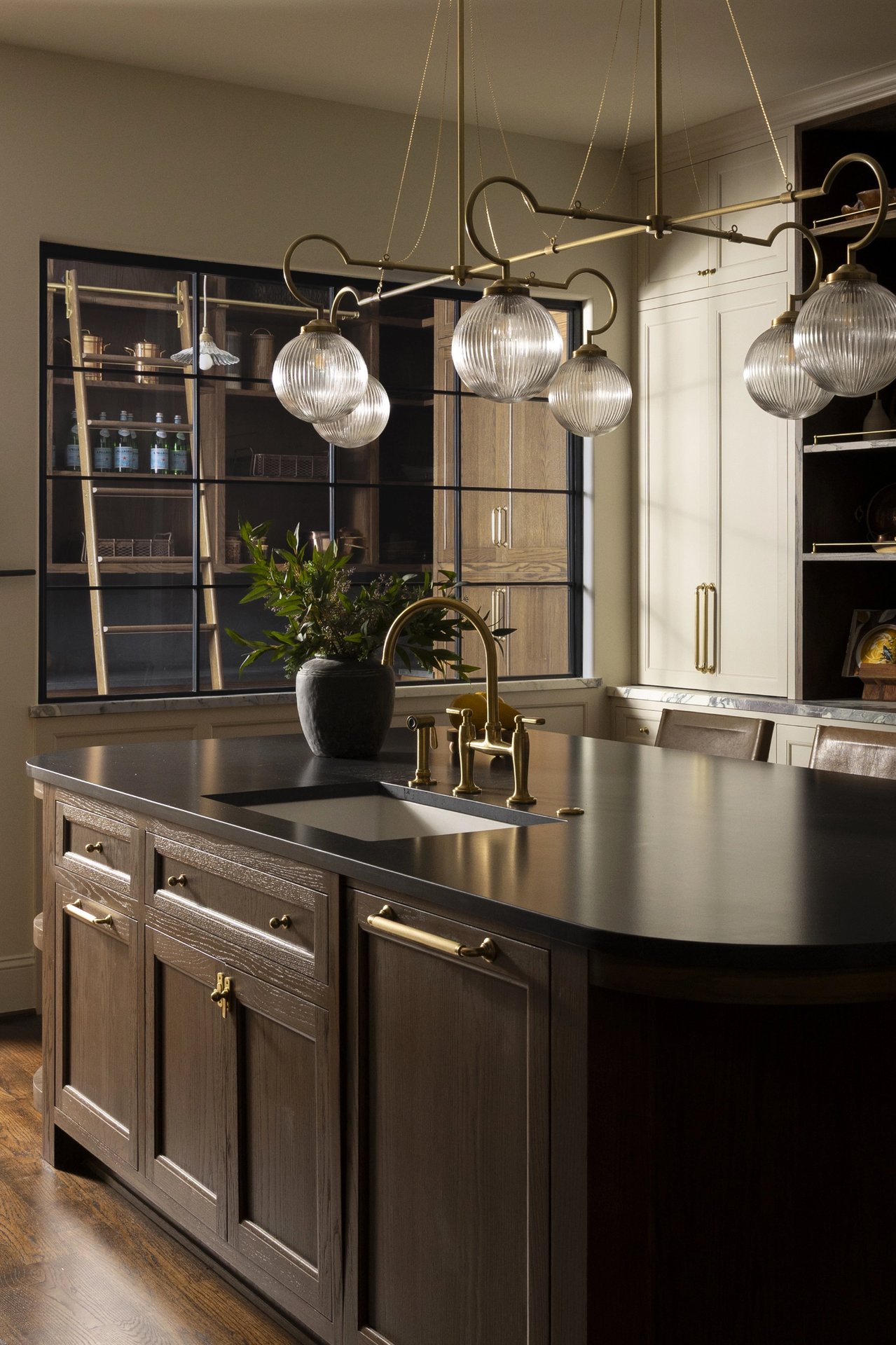
On the La Jolla luxury kitchen remodel pictured above, we sat down with the homeowners and priced the custom cabinetry by local workshop Geppetto Kitchens, the Honed Breccia Capraia marble countertop sourced from Miramar’s Arizona Tile showroom, and the professional-grade Wolf range from Monark Premium Appliance Co on Miramar Road while we were still designing the space. When the client wanted to ensure their walk-in pantry featured a custom iron window and a rolling library ladder, we integrated those architectural details directly into the design and budget simultaneously. No bids. No four-week back-and-forth.
That’s the difference. In our design-build process:
- The person designing your project is also pricing it — so what looks good on paper is also buildable inside your budget.
- That same person weighs in on constructability before plans are finalized — no “we actually can’t do that” surprises after demolition.
- Because there’s no handoff between designer, estimator, and project manager, decisions don’t get lost in translation or stalled waiting for someone else’s calendar.
- You see one number, one schedule, and one face — from the first conversation to the final walkthrough.
Where the Real Savings Live
People assume design-build is more expensive because it sounds more comprehensive. The opposite is usually true, and it’s worth understanding why.
You don’t pay twice for changes. In a traditional process, a change during construction means a charge from your contractor and a fee from your designer to redraw. In a design-build, both live inside the same project budget. At 123 Remodeling, we go further: design revisions are unlimited and free. Want to see the kitchen with the island shifted two feet over? Want to compare three cabinet layouts side by side? Want to scrap the whole plan and start again after walking the space one more time? Do it. We don’t bill for second thoughts during design — because the best version of your remodel is almost never the first one we sketch.
Fewer surprises means fewer change orders. When the builder is part of the design conversation, costly mistakes — like specifying a 36-inch range when the gas line is on the wrong wall, or designing a free-floating vanity over a tile floor that can’t support it — get caught on paper, not after demolition.
Faster start, faster finish. Skipping the bid phase alone usually saves four to eight weeks. And because materials are specified during design (not after bid acceptance), long-lead items like custom cabinetry and imported tile get ordered earlier. We routinely finish projects 20 to 30 percent faster than the traditional route.
Better budget honesty up front. I tell clients on day one what their project will realistically cost — a real number they can plan around, not a low teaser quote that falls apart once bids come in. That conversation is uncomfortable sometimes, but it’s a lot less uncomfortable than the conversation in month four when you find out the dream kitchen on your plans was always going to be 40 percent over budget.
Real Numbers: On a 2025 master bath remodel in Rancho Santa Fe, our design-build approach caught a misaligned shower drain and structural joist interference before plans were finalized — a fix that would have cost roughly $5,200 in jackhammering, re-pouring, and structural framing rework if it had been discovered during construction.
The Accountability Thing (This Is the Big One)
Here’s the benefit I think matters most, and it’s the one nobody puts in a brochure.
When something goes wrong on a remodel — and at some point, something always goes wrong — you want exactly one person to call. Not a designer who’ll tell you the contractor misread the plans, and not a contractor who’ll tell you the plans were wrong. You want someone who, the moment you say “there’s a problem,” answers with: “Okay, we’ll handle it.”
That’s what single-source accountability looks like. When the same person designed your project, priced it, and is running the build, nobody can pass the buck — not even internally. They own the mistake, the fix, and the cost of getting it right.
When one company holds both halves of the contract, the incentives finally line up with yours.
When a Build-Only Contractor Actually Makes Sense
I want to be fair here, because I’m not going to pretend design-build is right for every project.
A build-only contractor is the right call when:
- You already have finished, permit-ready plans from an architect you trust, and they’ve been vetted for buildability and budget.
- Your project is small and prescriptive — like a like-for-like water heater replacement or a straightforward fixture swap.
- You have a clear, fixed vision and zero appetite for design iteration. You know exactly what you want, down to the SKU.
- You’re acting as your own general contractor by choice and managing the trades yourself. (We meet a few homeowners every year who genuinely enjoy this. They are not most homeowners.)
If you’re remodeling a kitchen, redoing a primary suite, opening up a floor plan, or doing a home renovation — anything where design decisions and construction decisions are tangled together — the math almost always favors design-build.
What It Actually Feels Like to Work This Way
Let me describe a typical first month with us, because I think the experience is the best argument.
Week one: You meet one person who will design your project, price it, and run the build — the same face from the first walkthrough to the final punch list. We walk your home. We talk about how you actually live in it — the corner where the dog bowl goes, the cabinet you can’t reach, the sink you’ve cursed for ten years. We talk honestly about budget. We give you a realistic range for what you’re describing, not a fantasy number to win the job.
Weeks two: Design moves forward with pricing alongside it. You’re not waiting weeks for revisions because someone in another office is updating drawings. We make a change in the meeting; you see what it costs by the end of the week. And because revisions are unlimited and free, we encourage you to push back, sit with it, try the version you weren’t sure about. The right answer usually shows up around revision four, not the first pass.
Week three: You sign one contract that covers design, materials, labor, project management, and a guaranteed price. You know the start date. You know the finish date. You know who will manage your project.
That’s the whole pitch: one person, one budget, and one number to call.
Related Resources
If you’re planning a renovation in San Diego County, we’ve put together several guides to help you navigate the local market:
- What Remodeling Projects Require a City Permit in San Diego: A clear breakdown of which remodeling projects require a permit from the Development Services Department and which can proceed without one.
- Indoor-Outdoor Harmony: Remodeling Coastal San Diego Homes: How to design seamless transitions between your interior comfort and San Diego’s spectacular year-round weather.
- 10 Coastal Chic Kitchen Remodel Ideas for San Diego Homes: Practical ideas and local design inspiration for creating a sophisticated, beach-inspired kitchen.
Questions to Ask Before You Hire Anyone
Whether you go design-build or design-bid-build, ask any company you’re considering:
- Who designs my project, and who builds it — same company, or different? If different, who manages the handoff and how are change orders handled between them?
- When do I see real pricing — before final design, or after? “After” is where budgets die.
- Is the project manager an employee or a subcontractor? Subcontracted PMs juggle multiple companies’ jobs. Employees answer to one boss: you.
- What does your change-order process look like? Ask for an example from a recent project.
- Can I talk to a past client? Anyone can show you pretty pictures and make promises. The most important sign of quality and trust is the real experience.
If a company gets defensive on question five, that tells you everything.
The Honest Bottom Line
Design-build doesn’t make remodeling painless. We still hit hidden plumbing. Tile still gets backordered. Permits still take longer than they should. The shifting coastal San Diego soil and seismic activity still present interesting and inconvenient challenges.
What changes is that all of those problems land in one team’s lap, get solved without a phone tree, and don’t come with a side order of finger-pointing. You get to actually enjoy the part where your home starts looking like the home you’ve been picturing — instead of spending the project refereeing between people who barely know each other’s names.
That’s the part the Del Mar couple who called me last fall wanted most: a beautiful, open-concept home, yes, but also a process where they weren’t stuck playing referee in their own remodel.
If that sounds like the experience you’re after, we’d love to talk. Reach out for a consultation and let’s see if your project is a fit. The consultation is free. Design revisions are unlimited and free. And if it’s not the right fit — if you’ve already got plans you love and just need a builder — we’ll tell you that, too.